

28.10.2025
Visit to “Monicol” SRL: Green Energy, Recycling, and Organic Exports
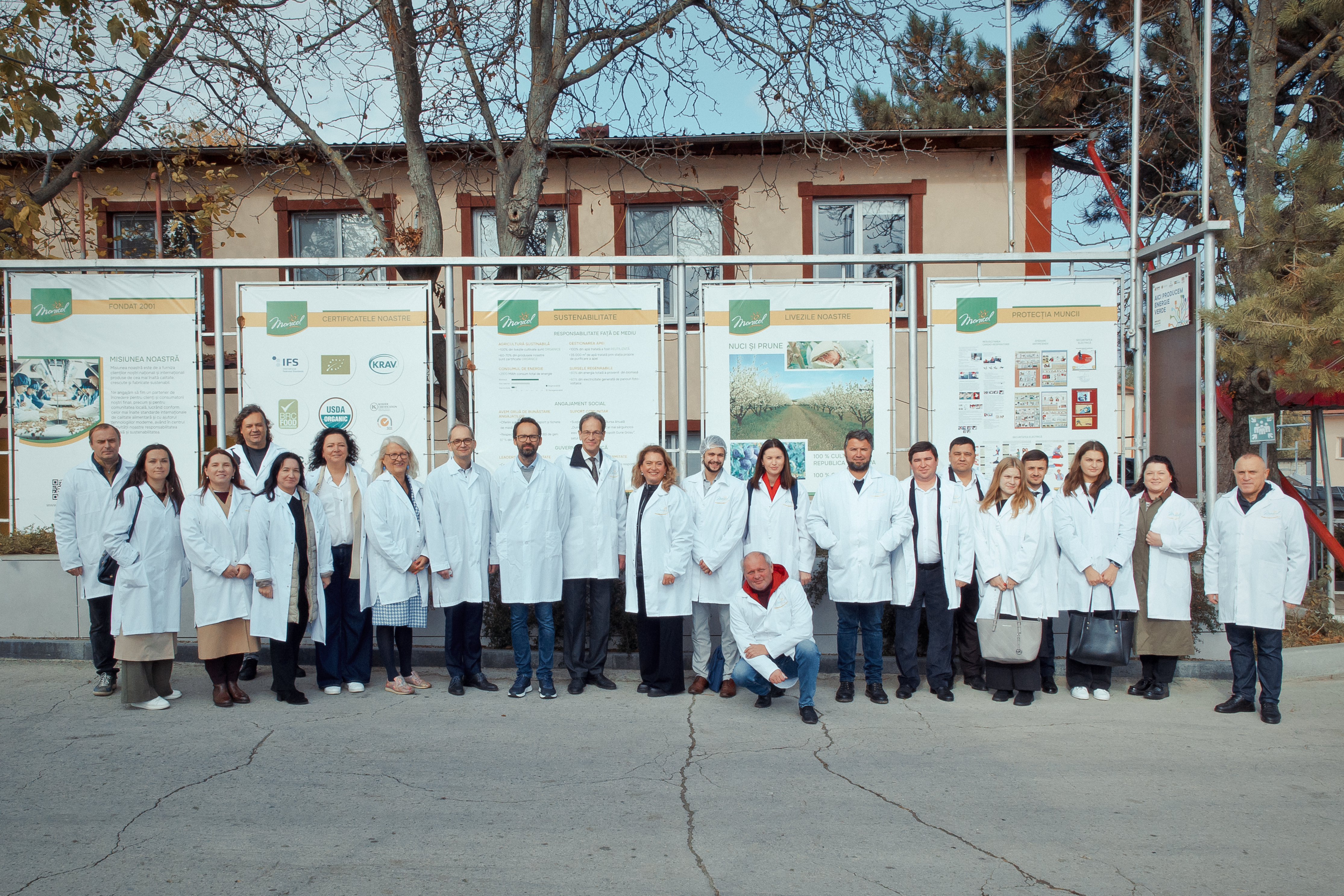
In the context of the World Sustainability Day, GIZ regional project PROGRESS and the European Business Association (EBA), organized a visit to the company “Monicol” SRL – an example of a business that combines innovation, environmental responsibility, and export orientation.
The event brought together the German Ambassador to the Republic of Moldova, GIZ management, EBA, industry associations such as Moldova Fruct, the Association of Walnut Growers of Moldova, the Agricultural and Rural Advisory Center, as well as young people involved in the awareness campaign “Choose Local, Choose Sustainable”.
“Monicol” SRL, based in the village of Nimoreni, Ialoveni district, is a local market leader in the processing and export of nuts and dried fruits, standing out through its integrated and sustainable business model. The company owns its own organic plum and walnut orchards and sources other fruits and vegetables—both organic and conventional—from local producers. A significant part of the raw materials is transformed into value-added products sold in demanding external markets such as the European Union, the USA, the United Kingdom, and Japan.
H.E. Mr. Hubert Knirsch, Ambassador of Germany to the Republic of Moldova:
Sustainable agriculture is important for consumers. I am very pleased to see that Moldova is indeed producing such products and exporting them to markets in Germany.
Claudia Hermes, Country Director, GIZ Moldova:
For us, it is very important that Moldova is increasingly interested in promoting local consumption and sustainability.
Mariana Rufa, Executive Director of the European Business Association (EBA Moldova):
When we talk about investments in the sustainable economy and organic production, “Monicol” is a true benchmark. A sustainable economy is not built in one or two years; it is a continuous process involving team education, securing human and financial resources, and building an organizational culture based on responsibility. At the same time, it is important for the state to promote clear policies and regulations, providing guidelines and tax incentives for producers adopting environmentally friendly and circular economic practices.
Association of Walnut Growers of Moldova, Association “Moldova Fruct” and the Agricultural and Rural Advisory Center highlighted the importance of knowledge, training, and research to support Moldova’s transition to sustainable and organic agriculture
